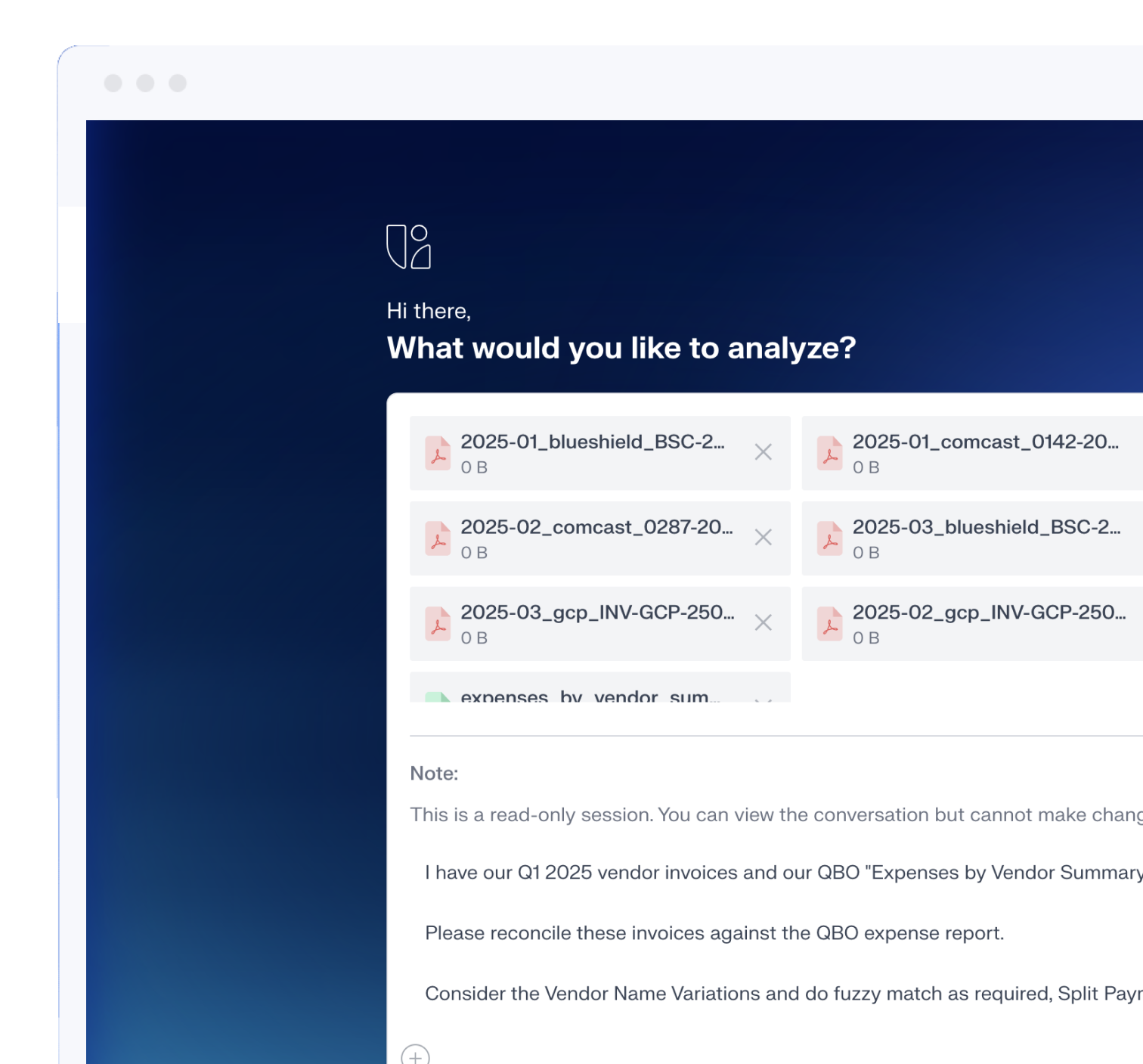

Banking teams stress-test liquidity before regulators do with aidnn.
Turn core deposit, funding, and liquidity data into decisions you can defend. aidnn models how your liquidity coverage ratio holds up under depositor runoff, with verified, audit-ready analysis in minutes.
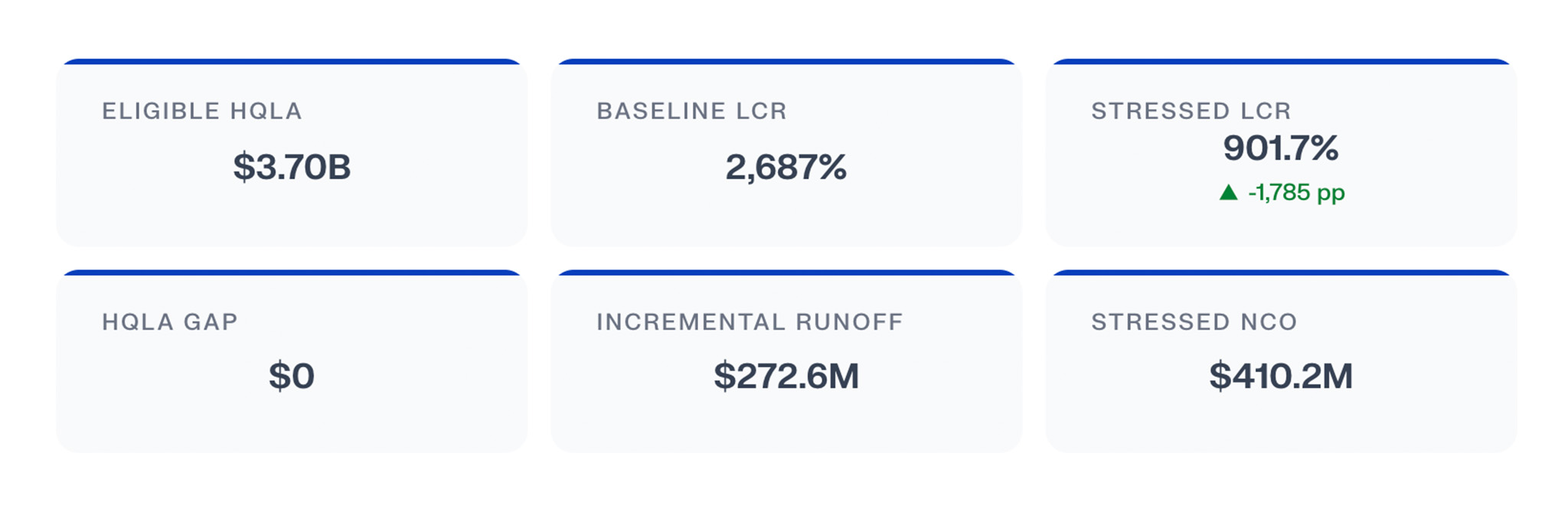
See Your LCR Hold Under Runoff
Model how the liquidity coverage ratio holds up as deposits run off, with provenance on every input.

How It Works
What Banking Companies Use aidnn For
Each demo reconciles fragmented banking data into verified, audit-ready analysis. Try any of them on your own data.

Large Exposure Concentration with Hidden Connected Counterparties
Surface hidden connections between counterparties that quietly push you past single-name concentration limits.

CET1 Capital Walk & CRE Devaluation Stress
Walk CET1 capital through a commercial real estate devaluation and see exactly where the ratio breaks.

Unemployment Rate Analytics
Trace how a rising unemployment scenario flows through losses, provisions, and capital.

From core banking systems with millions of transactions to loan tapes, card data, and a long tail of spreadsheets, your data lives across FIS, Fiserv, Jack Henry, lending and deposit systems, and the files on your team's desktops, which makes verifying answers nearly impossible for most LLMs.
Core banking, lending, card, and deposit systems do not connect, forcing manual reconciliation instead of analysis.
Joining data across core, loan origination, fraud, and CRM systems takes weeks.
Analytics are slow, error-prone, and regulated customer data cannot leave your environment.


aidnn Neocortex™ | The Intelligence Layer
Cognition That Compounds, Under Your Control
Banking runs on credit judgment, risk conventions, and institutional knowledge built over decades. NeoCortex, the cognition layer behind aidnn, gives your agents hierarchical memory of your terminology, metrics, and institutional knowledge. New learnings pass through validation gates and administrator approval, ensuring trusted information remains accurate and governed. When a credit officer moves on, their expertise stays within your organization instead of walking out the door.
Hierarchical memory: Four layers of intelligence that separate signal from noise.
Verified learning: Dream Time consolidation reinforces patterns that hold up.
Admin governance: Every learning is reviewable, reversible, and audit ready.
Intelligence that compounds: The more your team uses aidnn, the smarter it gets.
From Messy Data to Clear Decisions
aidnn deploys a team of specialized agents, not a single model, built to handle the complexity of multi-source insurance data with full transparency at every step.
Frequently Asked Questions
What does aidnn do for banks?
aidnn is an AI agent that turns fragmented core banking, lending, and deposit data into verified analysis. It reconciles data across systems that don't agree, runs the analysis, and independently verifies every step before a number reaches you.
Can aidnn run inside our environment?
Yes. aidnn can be deployed so that data never leaves your environment. Environments are isolated and encrypted, aidnn does not train models on customer data, and Isotopes AI maintains SOC 2 Type II compliance.
How is aidnn different from asking ChatGPT about our data?
A foundation model generates code and leaves verification to you. aidnn runs a team of specialized agents that plan, execute, and adversarially check each other, with a dedicated critic agent that can veto a result. In production, aidnn reaches 92.1% end-to-end verified accuracy across 522 sessions, compared to roughly 50 to 60% for single-model approaches.
Do we need data engineers to use aidnn?
No. aidnn works with data as it exists in your systems today, including exports with broken headers and inconsistent definitions. Teams get answers without standing up a data engineering project first.
How much does aidnn cost?
Pricing is custom. aidnn is sold as an enterprise product through our sales team, and there is no public price list or self-serve tier. Contact sales for pricing.